What Does It Mean to Build a More Beautiful Life?

Welcome to A More Beautiful Life Collective. I’m Cayce Fletcher, and I’m here to walk hand in hand with you as we grow in grace, build with purpose, and live beautifully.
We often approach our lives divided. We pour ourselves into our work to the neglect of our homes. We get so caught up in the care of our children that our Bibles get dusty sitting on our shelves. We focus on the keeping of our home, and the close friendships we once had just fall apart.
Our lives are often filled to the brim, and the one truth about time is that it always marches on. Before we know it, the life we had dreamed of has already marched on by, and we are left thinking, “This is not what I wanted.”
We all know the common saying, “The days are long, but the years are short.” I can feel this more and more as my oldest loses his little baby face and is growing like a weed. We are stepping into a new season. Gone are the days and weeks where the only thing we had to do is meals, naps, and bedtimes. We are in the car, going to school, then practice, then the next thing and the next thing.
Meanwhile, time is slipping away. We are all, of course, only getting older.
We don’t want time to pass like sand through our fingers. We want to take hold of life and intentionally live it. We want to make the most of our days, glorifying God and building a life that is truly beautiful. But, how? How do we build a beautiful life when many of us are just surviving, bouncing from one commitment to the next?
In Greg McKeown’s book Essentialism, he speaks of the way we need to approach our lives. We need to focus on the essential work and let the other things go. He says, “Essentialism is not about how to get more things done; it’s about how to get the right things done. It is about making the wisest possible investment of your time and energy in order to operate at our highest point of contribution by doing only what is essential.”
What are the essentials of A More Beautiful Life?
That’s what we are going to focus on today as we kick off a new series about how to build A More Beautiful Life. Let’s dive in.
What does it mean to build a more beautiful life?
We often act like all of the many areas of our life—money, faith, parenting, work—are all disconnected. We approach them as standalone parts instead of what they really are: All integrated parts of our life.
On the blog, I’ve written about money, theology, homeschooling, and more. It can seem like these are all differing topics. But, really they are connected by this central question: How do we faithfully live out what we believe in the ordinary work of everyday life?
At its core, we focus on three different areas of life: What we believe, what we are building, and how we are stewarding what we are given.
Believe. Cultivate. Manage.

Pillars: What Makes Up Your Life?
Before we begin with the AMBL Essentials, we have to determine what makes up our lives. Each of us will have similar priorities, but none of our priorities are the same. We all need to name our Pillars — or the central components of our lives — so that we can intentionally determine our Essentials.
Your Pillars will most likely fall into some of the following categories:
- Personal Growth: How are you wanting to develop yourself spiritually, intellectually, and emotionally?
- Health: What goals are you working towards for you and your family’s health?
- Vocation: What are your duties and responsibilities when it comes to the work that you do?
- Relationally: What roles do you play in your family, church, and local communities?
Your Pillars should not just be a general role. All of us may include some variation of daughter, wife, mother, and/or church member. But, how does this role affect your everyday life? Do you homeschool? Do you have to care for an aging family member? What does this Pillar actually look like?
Getting specific about your Pillar will help you know what you need to focus on when it comes to your Essentials. Someone who homeschools will need to work through the process of educating their children in a way that someone who sends their kids to a brick and mortar school would not. Someone who works part- or full-time will need to explore what it means to be a good worker in a way that a stay-at-home mom may not.
In both of these examples, you are still doing a component of the Essential. You are still parenting. You are still working. But, the focus is different.
To truly understand the Essential, you need to get specific about your Pillars.
Your Pillars will change as your seasons change. It is worth assessing what your current Pillars are at intervals. If you have homeschooled your children and the last one graduates, your Pillars change. You would need to assess how your life will look different now and work out your new Essentials.
The first step with the AMBL essentials is always to Name Your Pillars.
Believe: Know What You Believe and Why
The cornerstone of our lives is what we believe. Our faith impacts every single aspect of our lives. It shapes how we understand the world, what we value, and ultimately how we live.
A rightly ordered life recognizes that our faith should be at the center of all we do. We have to build our foundation on the truths of God’s word, on solid doctrine, and on a deep love for God.
We need to devote time to examining what we believe and ensuring that it matches up against the truths of Scripture. We need to create habits of being in the word daily, of prayer, and of spiritual disciplines for a strong Christian life.
What we believe doesn’t just impact our quiet time routines and what church we choose to attend. It changes the way we view marriage, parenting, education, finances, and even how we manage our home.
But, we have to know the truth in order to allow that truth to change how we live. We cannot intentionally build a life around our convictions if we haven’t taken the time to understand what those convictions are.
This means that each day we need to devote ourselves to God. We have to renew our commitment to His Word. And, we have to seek His Kingdom first.
The Believe Essential follows the Faith Formation Cycle. You must examine your beliefs, align them with Scripture, and develop your own personal statement of faith that you can pass on to others. This process is a cycle and is never finished.
Related: Why Faith Tradition Matters for The Faith We Inherit
Cultivate: Develop What Matters
If we know what we believe, but we don’t actually change our days to match it—it doesn’t really matter. Our beliefs should affect what we do daily. Our lives are shaped by what we repeatedly do, so it’s important that we cultivate what matters. Growth doesn’t happen automatically. It is developed intentionally.
We must recognize that our habits act as a form of worship. Our habits, disciplines, relationships, and environments shape who we become. When we just allow ourselves to fall into old habits, we might find that we are becoming something that doesn’t match our values. It takes work to match our lived days with what we believe.
Cultivation isn’t limited to spiritual disciplines. It also includes family culture, education, homemaking, hospitality, character, and the skills we develop. Our everyday lives can be repetitive and, at many times, mundane. We make dinner and sit down to talk about our days. Tomorrow, we will do the same thing. And, then, we’ll do the same thing the next day.
Being productive is good. However, we cannot confuse productivity with fruitfulness. Productivity is often connected with activity. But, fruitfulness comes from faithfulness over many years. Productivity measures what we accomplish; fruitfulness asks what our lives are producing.
We cannot force spiritual growth through productivity techniques, but we can faithfully practice disciplines and create environments that support growth.
The things we consistently practice are shaping the people we are becoming. How are we cultivating fruitfulness through the atmospheres and habits of our daily lives?
The Cultivate Framework gives you a process to define your aspirations, develop goals to help you become what you are envisioning, and determine habits and changes to your environment that will help you cultivate what matters.
Related: Life Proofing Your Habits
Manage: Faithfully Steward Everyday Life
When we know what we believe and have a vision for what we want to cultivate, we will look at our lives and feel the disconnect. Good intentions don’t always lead to the actions that we want.
We can desire to create a home atmosphere filled with the smells of fresh-baked bread and the sound of soft classical music in the background. But unless we are willing to get the music and bake the bread, our home will look and feel exactly the same. The desire has to lead to action.
At the same time, there are a million good things that we can pursue. It’s good to run marathons, mill your own flour, have a garden large enough to can the majority of your own food, spend 1,000 hours outside, homeschool your children, read 100 books a year, attend church three times a week, host in your home every week, sew quilts, knit hats and mittens for your kids, read aloud from good books, keep a nature journal, have your kids in sports, and the list goes on and on and on.
All those things are good. All those things are things I want to do — and I’m sure you would have some more ideas to add to the list of your own.
But, we all have limited time, attention, money, space, and bandwidth. A life with just the things I mentioned above would probably be full almost to the point of bursting. We have to have practical ways to manage what is in our lives so that these good things don’t consume us and become burdens.
This requires prioritization first. We must choose the best and get rid of the rest.
But, even after pruning responsibilities, we will still have to manage what is on our plate. The answer isn’t always to say no to everything. Sometimes, it’s to create a system to help you get up and get the work done.
Different responsibilities require different approaches. A recurring household task isn’t the same as a major project, and neither is the same as an important daily practice. This is why the AMBL Planning Method that I teach leaves room for the daily tasks of tending to our lives and homes while also creating space for power hours to move forward on our projects and goals. You can read more about this in Christian Stewardship in Everyday Life | AMBL Manage.
Remember, systems should serve our priorities, not become the purpose of our lives. Managing our lives well isn’t about doing everything. It’s about faithfully attending to what we’ve been given.
The Stewardship System is a process for determining how to manage what has been given to you to steward. It can be applied to any Pillar, and it will help you to walk away with a system to manage that Pillar. The goal of our systems is to create something that can keep us going even when our hands are full and life gets busy. The Stewardship System gets you there.
Bringing It All Together: One Life, Not Three Separate Categories
All three of these categories inform and impact the other. We need to have a solid foundation in what we believe to determine our vision for what we need to cultivate in our lives. The only way that we can produce lasting fruit from our habits is to return to them daily, and we do this by managing all the things we have been given to steward.
We just finished up a series on money and we can see how these three AMBL Essentials play out in that series:
- Believe: We begin by establishing what Scripture says about finances. We create a solid biblical foundation and determine the practical application for those beliefs.
- Cultivate: We determine how the beliefs we have should affect the vision for our finances. What should a Christian’s money goals be? What habits get us to those goals?
- Manage: We figure out some practical systems to steward our finances through the Budgeting 101 steps, the Budgeting by Buckets method, and our Financial Power Hour.
Believe. Cultivate. Manage.
It’s not three separate categories that never speak to each other. The AMBL Essentials give us a framework for how to approach all the important areas of life: Our homes, families, marriages, and work. We need to figure out what we believe, determine what we need to cultivate, and create systems to help us manage what we have been given.
These aren’t three steps we complete once. They’re interconnected aspects of the same life. We continually return to Scripture, cultivate what matters, and adjust how we manage our responsibilities.
Creating Your Rule of Life
I know we’ve probably all done this at some point: We get super interested in a topic. We read everything we can about it. We make goals. We create schedules. We do a good job of following our plan for about 3 weeks, then inevitably, our focus shifts elsewhere.
Our Manage Essential gives us systems to help us steward what we are given even when life gets busy. But, our systems cannot help us if we are not training our attention to remain focused on the Pillars we have already worked through.
Our Pillars together make up our lives, and we should not neglect one to focus on another. That is easy to write, but much harder to live out.
We need an organizing framework to keep the work done in our Essentials organized so that we don’t lose the progress we have made on each task. This is your AMBL Rule of Life. I recommend creating a designated binder or notebook for your rule of life so that it doesn’t get lost in the shuffle. This is not necessarily something that you add to each day or week (like your project notebook). Instead, it is a place to keep track of the deep thought that you are doing about each of your Pillars.
Your AMBL Rule of Life is made up of two components:
1. Your Pillar Page
Your Pillar Page is where you hold all the work that you have done through the AMBL Essentials. Create a notebook page or use a printable Pillar Page for each Pillar in your current season. Then, add the following:
- Believe: What convictions do I have about this Pillar?
- Cultivate: What aspirations do I have about this Pillar?
- Manage: What systems do I have to steward this Pillar?
You can also include your current focus for this Pillar. (Remember, you have to prioritize, prioritize, prioritize. You can’t do all things all at once!) If there are future goals, notes, and books or other ideas that you have about this Pillar, jot them down on this page too.
Your Pillar Page is a working document that you add to over the years as seasons change and you grow in wisdom and knowledge.
2. Your Seasonal Rule of Life
Your Pillar Page is where you’ve collected the work you’ve done through the AMBL Essentials process. But, by itself, it doesn’t fix the issue of your attention and the next shiny thing. We need a place to bring it all together—to collect what we know and make a map for the season ahead.
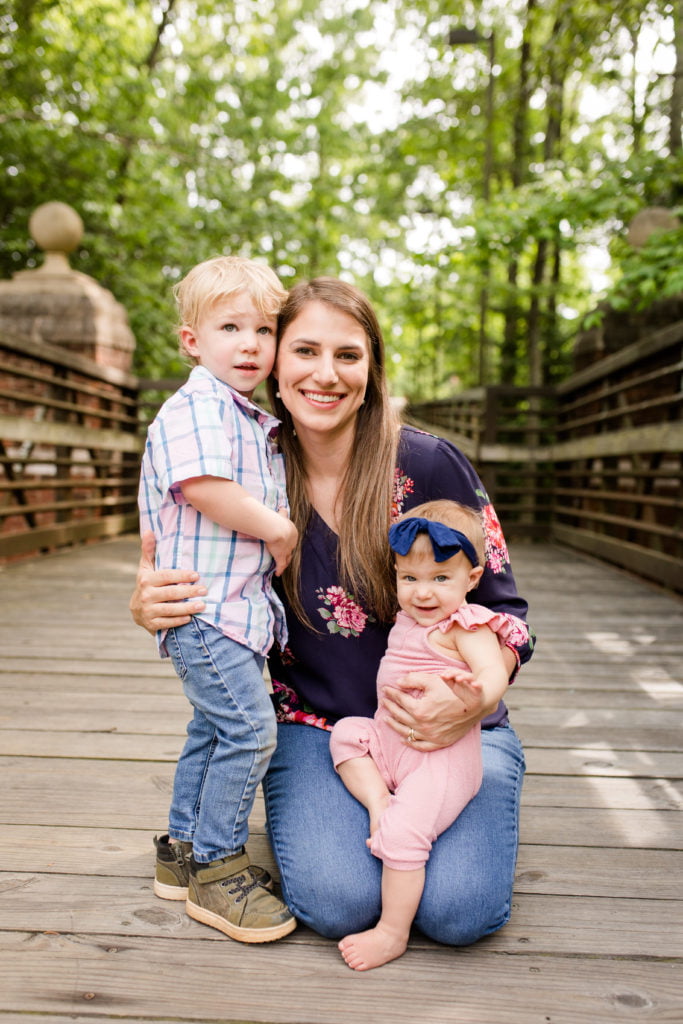
This is your seasonal Rule of Life. The name is intentional. Your rule of life will change as the years go on. My son is in 1st grade and I have two littles. When my daughter moves into kindergarten next year, my season will change. Last year, I only had this blog and my husband’s business on my plate. This year, I’ve added three more small part time jobs. My season changed.
You don’t have to create a new rule of life when the season literally changes from fall to winter—though you definitely could! Instead, you just need to get into a rhythm of reviewing your season and making sure that your rule of life works for whatever season you are currently in.
Your seasonal rule of life should be a snapshot of all of your Pillars. It should be one to two pages and include some of the following:
- Daily Rhythms
- Weekly Rhythms
- This Season’s Priorities
- Ongoing Maintenance Systems
- Review Rhythm
This snapshot will help you sift through the Pillars that require your active focus for this season. It will also help you keep track of the systems that you already have in place for Pillars in the maintenance category.
I often talk about my Bible and Books routine in the morning. This is a maintenance routine for my personal growth category that keeps me moving forward with my spiritual disciplines and reading goals. I don’t want to lose this routine, but it isn’t one that requires an active focus. On the other hand, I do need to spend time working through my Work and Homemaking Pillars because I’ve added a lot of responsibilities and what worked in the past is not working (and my house is a mess!). So this would need to be a pillar in active focus.
The core of the AMBL Essentials method is that you must prioritize. Your Rule of Life is a pinnacle of prioritization. But, prioritization doesn’t take away the desire to do the other things that you want to do. I still want to make quilts, bake bread, and have a huge garden. Where do I put these someday goals?
I keep them on a revisit later spot. You can keep track of these revisit later tasks either on your seasonal rule of life or on the corresponding Pillar page. Importantly, you are writing it down and filing it away for later so that it is not rolling around in your brain.
Where Do We Begin?
You don’t need to overhaul everything today. You don’t have to create a new system for every part of life. All you need to do is pick one area and follow the AMBL essentials.
Ask yourself three questions:
- Believe: What convictions are shaping the way I live?
- Cultivate: What habits, practices, or relationships need my attention?
- Manage: What practical changes would help me be more faithful with my responsibilities?
If you are wanting to dive deeper in any part of your life, you can find resources in the shop that will help you walk through the process of understanding what you believe, determining what you want to cultivate, and creating systems to help you live it out.
The AMBL Planning Method is a practical system for managing everyday life. It’s one way to put the last Essential, Manage, into practice.
Visit A More Beautiful Life Collective Shop for bible studies, planners, and other resources.
If you’ve enjoyed this episode, consider subscribing to the podcast. You can also leave a rating and review to help others find the show. Share with a friend or family member to keep the conversation going.
Until next time, keep creating a life you love and cultivating your heart for God.
***If you have enjoyed visiting A More Beautiful Life Collective, please like, comment, share, and subscribe. Let’s make the world more beautiful together. This post contains affiliate links. If you purchase something through this link, I earn a small commission at no cost to you. It’s a win-win!***


Leave a Reply